Introduction
Frederick George “Freddy” Moore (July 19, 1950 – August 25, 2022) was more than just a rock musician—he was a songwriter, performer, and dreamer who embodied the soul of American rock ’n’ roll during the 1970s and 1980s. Known for his eccentric stage presence, quirky humor, and catchy rock-pop compositions, Freddy carved out a distinct niche in the Minneapolis and Los Angeles music scenes.
Though the wider public often remembers him for being the first husband of actress Demi Moore, Freddy’s story is far richer. His career spanned decades, he fronted memorable bands like The Kats and The Nu-Kats, and he kept playing music long after commercial success slipped past him. His journey, though punctuated by hardships—including a battle with Alzheimer’s disease—remains a story of dedication to art, resilience, and authenticity.
Early Life and Musical Roots
Born in Minneapolis, Minnesota, Freddy grew up in a post-war America where rock music was reshaping culture. From an early age, he gravitated toward music, teaching himself guitar and piano while absorbing the sounds of Elvis Presley, The Beatles, and The Rolling Stones.
By his late teens, he was already playing in local bands, performing at small clubs, and developing a style that mixed rock ’n’ roll energy with playful theatrics. Minneapolis in the late 1960s and 1970s was a hotbed for music innovation, later producing icons like Prince and The Replacements. Freddy was part of this fertile musical ground, adding his own eccentric flavor to the scene.
The Kats: A Band with a Bite
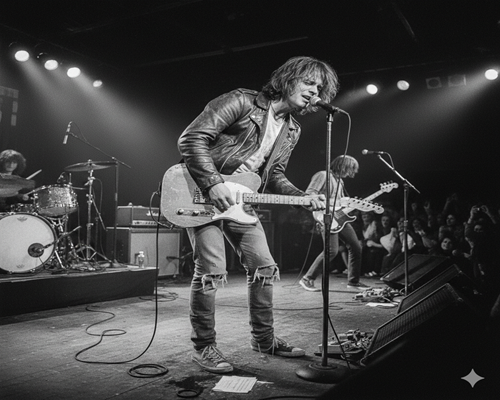
Freddy Moore big break came with The Kats, a Minneapolis-based band that blended rock, pop, and performance art. The band stood out not only for its catchy songs but also for its theatrical presentation. Members often performed dressed as cats, a quirky gimmick that gave them a unique stage identity.
The Kats became popular in local venues, where audiences adored their humor-infused performances and Freddy’s magnetic presence as the frontman. His songwriting style stood out for its clever wordplay and energy—it was lighthearted yet sharp, comedic yet musically sophisticated.
When Freddy moved to Los Angeles, the band transformed into The Nu-Kats, hoping to catch the wave of the burgeoning California rock scene. They released music independently, including the single “It’s Not a Rumour” (1980), which achieved cult status years later. Interestingly, the track featured background vocals by Freddy’s wife at the time—Demi Moore, then an unknown aspiring actress.
Though The Kats/Nu-Kats never achieved national stardom, they became staples of the underground L.A. rock circuit, performing in venues like the Troubadour and Whisky a Go Go, alongside other rising acts.
Marriage to Demi Moore
One of the most publicized aspects of Freddy’s life was his marriage to actress Demi Moore. The two wed in 1980, when Demi was just 17 and Freddy was 30. At the time, Demi was struggling to find her place in Hollywood, and Freddy provided emotional support and creative encouragement.
Demi later revealed in her 2019 memoir Inside Out that Freddy was her first great love and that he played an important role in shaping her early years. Their relationship, however, was strained by differences in age, career ambitions, and life paths. The marriage ended in 1985, shortly before Demi’s rise to Hollywood superstardom.
Despite the marriage being short-lived, Freddy remained an important figure in Demi’s life story. Still, for Freddy himself, his true legacy always remained tied to his music, not his association with celebrity.
Musical Persistence and Independent Spirit
Even after the heyday of The Kats, Freddy continued writing and recording music. He played in various bands, experimented with styles, and self-released much of his material. Unlike many musicians chasing fame, Freddy valued the act of creating and performing above everything else.
His music blended rock ’n’ roll with humor and storytelling. He wrote songs about love, everyday struggles, and absurdities of life, often with a wink and a laugh. For fans, seeing Freddy perform was as much about the energy and fun as it was about the sound.
Though he never broke into the mainstream, Freddy became a cult favorite. His fans admired his independence, and he inspired many younger musicians who saw him as proof that authenticity matters more than commercial success.
Later Life and Personal Struggles
Freddy Moore later years were marked by both love and hardship. In 2005, he married Renee Moore, who became his partner, supporter, and eventually his caregiver. Renee helped bring Freddy’s unpublished works and unreleased recordings to light, ensuring his music reached audiences even as his health began to decline.
In 2014, Freddy was diagnosed with Alzheimer’s disease, a cruel condition that gradually eroded his ability to remember and perform. For a man whose life was built around music and creativity, the diagnosis was devastating. Yet Freddy and Renee faced it with courage, documenting his experiences and raising awareness about the disease.
Despite his condition, Freddy’s passion for music never faded completely. He continued to strum his guitar, hum tunes, and connect with music until his final years.
Passing and Legacy
On August 25, 2022, Freddy Moore passed away at the age of 72. News of his death prompted tributes from fans, fellow musicians, and even from Demi Moore, who acknowledged the deep impact Freddy had on her early life.
Freddy may not have been a household name, but his legacy endures in multiple ways:
-
Through the cult following of The Kats/Nu-Kats, whose quirky performances remain remembered by those who saw them live.
-
Through his vast collection of independent recordings, many of which continue to circulate online and among dedicated fans.
-
Through his role as an example of what it means to pursue art for passion rather than fame.
His story reminds us that not all influential musicians are chart-toppers—some, like Freddy, leave their mark quietly, in the hearts of those they inspire.
Conclusion
Freddy Moore’s life is a story of music, love, and resilience. From his beginnings in Minneapolis clubs to his theatrical performances in Los Angeles, he lived as a true artist—driven not by money or recognition but by the sheer joy of creating music.
Yes, history will always remember him as Demi Moore’s first husband, but to those who knew him, saw him live, or listened to his music, Freddy was much more. He was a rocker, a storyteller, and a dreamer who never let go of his passion, even when life dealt him difficult cards.
In the end, Freddy Moore legacy is one of authenticity. His career may not have followed the conventional path to fame, but his music and spirit continue to resonate, reminding us that the true measure of an artist lies not in celebrity but in the ability to inspire, entertain, and live authentically through art.