
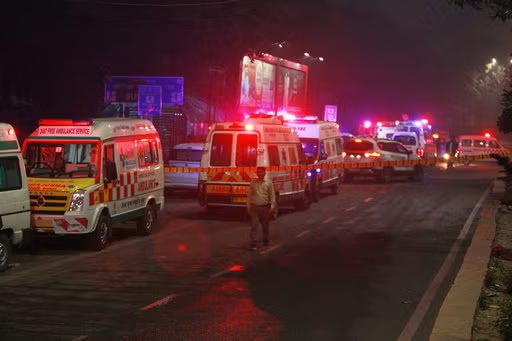
New Delhi, November 10, 2025 — The nation’s capital was plunged into chaos and grief on Monday evening after a powerful explosion ripped through a vehicle near the Red Fort metro station. The blast, which occurred at around 7:00 p.m. local time, claimed the lives of at least eight people and left more than twenty others injured. The tragedy, happening in one of Delhi’s most iconic and heavily visited areas, has sparked widespread alarm and raised fresh concerns about urban safety and national security.
The Incident: A Routine Evening Turns Tragic
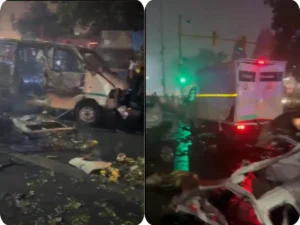
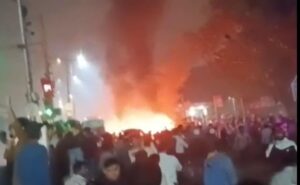
According to preliminary reports, the explosion took place in a slow-moving car waiting at a red light near Gate No. 1 of the Red Fort metro station. Witnesses described a sudden flash followed by a deafening blast that sent shockwaves across the congested area. Within seconds, flames engulfed nearby vehicles, while smoke billowed over the historic Red Fort complex — a UNESCO World Heritage site and a symbol of India’s rich history.
Eyewitnesses said the sound of the explosion could be heard several kilometers away. The impact shattered nearby shop windows, damaged parked vehicles, and caused panic among pedestrians and commuters. Within minutes, the usually vibrant evening traffic turned into a scene of horror and confusion.
“I was walking toward the metro station when I heard a loud bang,” said one commuter who narrowly escaped the blast. “The car burst into flames, and people started running in every direction. There was smoke, screaming, and chaos — I have never seen anything like it.”
Immediate Response and Rescue Operations
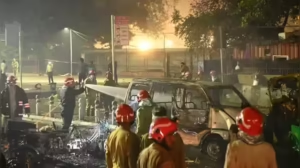
Emergency services arrived at the scene within minutes. The Delhi Fire Department dispatched multiple fire tenders to control the blaze, while police and paramedics cordoned off the area to facilitate rescue operations. Nearby hospitals, including Lok Nayak and Maulana Azad Medical College, were placed on high alert to receive victims of the explosion.
Police officers and forensic teams began collecting evidence while firefighters worked tirelessly to douse the flames and prevent further explosions. Traffic on Netaji Subhash Marg and surrounding areas was diverted as ambulances rushed the injured to hospitals.
Delhi Police Commissioner Rajesh Pratap Singh confirmed that at least eight people had died and more than twenty sustained injuries, many of them serious. “We are investigating the cause of the explosion. At this point, it is too early to determine whether it was accidental or deliberate,” he told reporters.
The National Security Guard (NSG) and the National Investigation Agency (NIA) were also called in to examine the site. Sniffer dogs and bomb disposal squads scoured the debris for clues.
Possible Causes Under Investigation
Authorities have yet to confirm the cause of the blast. Early assessments suggest two possible scenarios — a technical malfunction or an improvised explosive device (IED). However, the intensity of the explosion, which ignited multiple nearby vehicles, has prompted investigators to explore the possibility of a planned attack.
Sources close to the investigation indicated that the car involved was a small hatchback registered in Delhi. Forensic experts are examining fragments of the vehicle to determine whether the blast originated from within the fuel tank, a gas cylinder, or an external device. CCTV footage from traffic cameras and nearby establishments is being reviewed to trace the car’s movements in the hours leading up to the explosion.
One senior officer stated, “We are not ruling out any angle. Whether it was a mechanical failure, a chemical reaction, or a deliberate act, we will follow every lead. Given the sensitive location, we are treating this as a high-priority case.”
Impact on the City and Security Measures
The explosion has cast a shadow over Delhi’s sense of security. The Red Fort area is not only a heritage site but also a high-security zone frequently visited by tourists, locals, and foreign dignitaries. The incident has forced authorities to re-evaluate security protocols around major monuments, metro stations, and public gathering points.
Soon after the explosion, security alerts were issued across the National Capital Region (NCR). Additional police forces were deployed in areas like Connaught Place, Chandni Chowk, and India Gate to prevent any potential follow-up incidents. Metro and bus services were temporarily disrupted near the Red Fort and Jama Masjid areas as precautionary measures.
The Ministry of Home Affairs (MHA) convened an emergency meeting late in the night to assess the situation. Union Home Minister Arvind Menon expressed his condolences to the victims and their families while assuring the public that “no stone will be left unturned in finding those responsible.”
Eyewitness Accounts: Scenes of Chaos and Courage
Many who were present near the Red Fort metro station recounted the horrifying moments following the blast. Shopkeepers in the vicinity described how the evening crowd turned into a stampede as people tried to flee.
“One moment we were closing up shop, the next there was a huge explosion,” said Ramesh Kumar, a tea vendor. “I saw fire and heard people screaming. A man was trying to pull someone out of a burning car. It was heartbreaking.”
Several bystanders displayed remarkable courage, helping injured victims and directing traffic away from the flames before emergency responders arrived. Local residents also opened their shops to shelter panicked pedestrians and offered water to those affected.
Public Reaction and Fear of Recurrence
The incident has triggered widespread shock and outrage on social media. Hashtags like #DelhiBlast and #RedFortAttack began trending within hours, as citizens expressed grief, concern, and solidarity with the victims. Many have called for stronger security checks, especially in high-traffic areas near heritage sites.
For many Delhi residents, the blast evokes painful memories of past terror incidents in the city, including the 2005 Diwali eve blasts and the 2011 Delhi High Court bombing. While no organization has claimed responsibility for the current explosion, the similarities in timing, location, and impact have stirred fears of a possible resurgence of coordinated attacks.
Government and Political Reactions
Prime Minister Narendra Modi expressed deep sorrow over the incident, tweeting, “Deeply saddened by the loss of lives in the Delhi explosion. My thoughts are with the victims and their families. The investigation is underway, and those responsible will be brought to justice.”
Chief Minister Arvind Kejriwal visited the site early Tuesday morning and met with local officials and first responders. “This is a tragic day for Delhi. We stand with the victims’ families and urge citizens to remain calm while the investigation continues,” he said.
Opposition leaders also called for transparency and accountability. Many have demanded that the central government conduct a comprehensive review of public security systems in metropolitan areas.
The Broader Context: Urban Safety and Preparedness
The Delhi blast underscores the growing vulnerabilities of densely populated cities where everyday life intertwines with complex infrastructure and limited emergency accessibility. Experts warn that India’s metros, though modernizing rapidly, remain susceptible to both accidental and deliberate disasters due to outdated safety standards and inadequate surveillance.
Dr. Shalini Dutta, an urban safety analyst, remarked, “This incident is a wake-up call. Whether it was a bomb or a malfunction, the fact remains that our public spaces need better monitoring, stricter vehicle checks, and stronger inter-agency coordination.”
Emergency response agencies have also faced scrutiny for response times and preparedness. However, eyewitnesses noted that firefighters and paramedics acted swiftly under challenging circumstances, preventing further casualties.
Community Support and Relief Efforts
Hospitals across Delhi have opened emergency wards for blast victims. Volunteers and NGOs have mobilized to assist families seeking information about missing relatives. Blood donation drives have been initiated at several locations, and community leaders have urged citizens to cooperate with police investigations by sharing photos or videos that might aid the inquiry.
The Delhi government has announced an ex-gratia compensation for the families of those who lost their lives, along with financial assistance for the injured. Psychological counseling services are being arranged for survivors traumatized by the event.
What Comes Next
The focus now shifts to determining the exact cause of the explosion and ensuring accountability. Forensic reports, CCTV analysis, and witness testimonies will form the core of the investigation. Authorities are also expected to review Delhi’s broader security framework, especially near critical infrastructure and tourist areas.
In the coming days, increased police presence and tighter vehicle checks are likely to continue across the capital. Citizens have been urged to remain alert, avoid spreading unverified information, and report any suspicious activity to authorities.
Conclusion
The Delhi bomb blast near the Red Fort metro station has shaken the nation’s capital, reminding citizens and authorities alike of the fragility of safety in public spaces. Whether an accident or an act of terror, the incident stands as a tragic lesson in vigilance and preparedness.
As investigators work tirelessly to uncover the truth, the city of Delhi mourns its lost citizens — ordinary people who became victims of an extraordinary tragedy. The hope now lies in justice, resilience, and the collective strength of a city determined to stand tall once again.