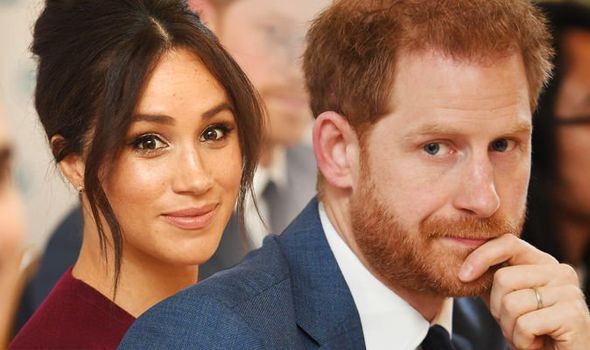
Since her marriage to Prince Harry in 2018, Meghan Markle has been one of the most talked-about figures in modern royal history. Her journey from Hollywood actress to Duchess of Sussex, and eventually to an independent public figure in the United States, has been marked by both admiration and controversy. The question that continues to intrigue many observers is simple yet complex: Is Meghan Markle still a royal?
The answer depends on how one defines the term royal. Legally, ceremonially, and socially, Meghan retains certain associations with royalty—but her role within the British monarchy has changed drastically since 2020, when she and Prince Harry stepped back from official royal duties.
The Beginning: Becoming a Royal
When Meghan Markle married Prince Harry on May 19, 2018, in a globally televised ceremony at St. George’s Chapel, Windsor, she officially became Her Royal Highness The Duchess of Sussex. The title was granted by Queen Elizabeth II as part of a long-standing tradition of bestowing dukedoms upon male members of the royal family upon marriage.
At that moment, Meghan became part of the royal institution, known informally as “The Firm.” Her role included attending royal events, representing the monarchy in charitable endeavors, and supporting the Queen’s official engagements. For a short time, she was a working royal, meaning she performed public duties on behalf of the Crown.
However, as many royal watchers know, this period was brief. The intense media scrutiny, alleged lack of institutional support, and internal tensions led Meghan and Harry to reconsider their place within the monarchy.
The Step Back: “Megxit” and Its Implications
In January 2020, Meghan and Harry announced that they would “step back as senior members of the Royal Family.” This moment—quickly dubbed “Megxit” by the press—reshaped their relationship with the monarchy forever.
Their statement made clear that they sought to become financially independent while continuing to support the Queen. Yet, Buckingham Palace’s response clarified that stepping away from royal duties also meant losing certain privileges.
By the end of March 2020, the transition was official:
-
Meghan and Harry stopped using their “His/Her Royal Highness” (HRH) styles in an official capacity.
-
They ceased to represent the Queen at public events.
-
They repaid the taxpayer money used to renovate their former home, Frogmore Cottage.
-
They began earning private income through media deals, including partnerships with Netflix, Spotify, and the publication of Prince Harry’s memoir, Spare.
These changes marked a fundamental separation between Meghan and the institution of the monarchy.
Titles and Technicalities
Even though Meghan no longer performs royal duties, she still holds the title Duchess of Sussex. Titles of nobility are granted for life unless revoked by the monarch or Parliament—a rare occurrence. As such, Meghan remains a duchess in name.
However, she no longer uses the style Her Royal Highness. The distinction is subtle but significant. “HRH” signifies an active, official member of the royal family. Without it, Meghan’s status becomes more honorary or symbolic, rather than functional.
In practical terms, Meghan Markle is no longer a working royal, but she is still royal by marriage. Her husband, Prince Harry, remains a prince by birth and Duke of Sussex by title, and these connections extend to her. Therefore, while she is technically still a royal family member, she is no longer part of the royal institution’s inner workings or public representation.
Life Beyond the Palace
After stepping away from official royal duties, Meghan and Harry relocated to California, where they built a new life centered on philanthropy, media production, and advocacy. Through their nonprofit organization, Archewell Foundation, they focus on issues like mental health, women’s empowerment, digital safety, and social justice.
In the United States, Meghan has cultivated a public identity distinct from her royal persona. She has written a children’s book (The Bench), launched a podcast (Archetypes), and appeared at major global events such as the Invictus Games and various humanitarian summits.
Critics argue that Meghan continues to leverage her royal association to enhance her public influence. Supporters, on the other hand, view her as redefining what it means to be a modern royal—one who champions causes without the constraints of tradition or protocol.
The Monarchy’s Perspective
From the palace’s standpoint, Meghan and Harry’s departure created a precedent for how royals might separate from institutional duties while maintaining familial ties. The late Queen Elizabeth II’s approach was measured but firm: she expressed affection for the couple while reinforcing that they could not “half in, half out” the monarchy.
King Charles III, who ascended to the throne in 2022, has largely maintained that stance. Meghan and Harry are still part of the royal family in a personal sense—they are invited to family occasions and recognized in the line of succession—but not in an official or ceremonial capacity.
Their children, Prince Archie and Princess Lilibet, are technically royals by birthright as the grandchildren of a reigning monarch. However, like their parents, they do not hold any working roles or public royal responsibilities.
Public Perception and the Question of Identity
Whether Meghan Markle is still a royal often depends on perspective rather than protocol.
To traditionalists, being a royal means adhering to centuries-old expectations: service to the Crown, political neutrality, and a life bound by duty. In that sense, Meghan is no longer a royal.
To modern observers, however, royal identity can extend beyond the palace walls. Meghan continues to use her platform to champion causes with global impact, embodying qualities—charisma, advocacy, visibility—that have historically defined popular royals like Princess Diana. Her activism, though separate from the monarchy, carries the gravitas of her former royal role.
The media’s portrayal of her remains polarized. In the UK press, she is often framed as a disruptor or outsider. In the United States, she is frequently seen as a modern figure who challenged outdated institutions. This divide highlights how the meaning of “royalty” itself is evolving in the public imagination.
The Evolution of a Modern Duchess
Ultimately, Meghan Markle’s story is about transformation. She entered the royal family as a symbol of change—a biracial American actress marrying into one of the oldest monarchies in the world. Her exit marked another kind of revolution: redefining how a royal can live outside the system while maintaining a global presence.
Her identity now straddles two worlds:
-
She remains tied to royalty through her marriage, titles, and family lineage.
-
Yet, she operates independently, as a celebrity philanthropist and media entrepreneur rather than a representative of the British Crown.
Conclusion
So, is Meghan Markle still a royal?
Technically, yes—she remains the Duchess of Sussex and the wife of a British prince. Symbolically and functionally, however, she has stepped beyond the boundaries of royal life.
Meghan’s journey reflects the changing nature of monarchy in the 21st century. Where previous generations were defined by duty and hierarchy, Meghan represents a new paradigm: one of autonomy, activism, and personal reinvention.
In the end, Meghan Markle may no longer serve as a royal in the traditional sense—but her influence, visibility, and impact remain undeniably royal in their own right.